
Keoladeo Ghana National Park, Bharatpur, needs no introduction, it is world famous destination for bird watchers, home to more than 350 species of avian-fauna from all categories, resident, migratory, critically important species and various mammals and aquatics. Historical hunting ground, Bharatpur, is now maintained proudly by villagers and government authorities, and most important guardians are the guides and rickshaw drivers, who offer the best services to birders. Water is topmost essential commodity for survival of every living being, humans being the most dependent and topmost consumer, has duty to maintain it with care and responsibility. Few years before when Bharatpur was dry, as people tell us, the birds were driven away, and everything got affected. There was pressure on government to bring the Chambal water by pumping to the affected zones, and Water came, bringing back the life.
Untill this year, the bharatpur was being missed by me due to some or other reason. Alok and Rohit were planning this trip and I happened to jump in at last moment. The Bharatpur season was just at its end, and we were still hopeful that we wont be disappointed. We visited Bharatpur for two full days birding, one day at Chambal, one day at Jaipur and around while travelling back. Thanks to the rail availability, we had to put Jaipur in the plan.
Day-1 : March 2, 2013, Bharatpur
Upon reaching Bharatpur station at 3:30 pm, quickly checked in the Iora guest house, My rickshaw driver Jeetu, was waiting to take me to sanctuary which is 1 km away from guest house. This cheerful guy pacified me and answered all my questions arising due to excitement and anxiety of the first time impressions I was going to have about this charismatic place....The path leading to temple surrounded by water bodies and huge flocks of birds settled in to it, was such site to cherish and I was stunned. From photography point of view a huge feast was awaiting to come....Sun was setting and casted beautiful golden light upon the place.

Sambar Deer

Painted Stork (juvenile)

Neelgai - female

Neelgai - male


Jungle Babbler

Peacock - coming to roost
Day-2 : May 3, 2013, Chambal Sanctuary
We had spent wonderful time with our guest house owner, Mr. Devendra Singh discussing about Birds and Photography earlier night and his descriptions of Chambal and the show stopper..Skimmers, made us restless. Morning we started off the most wonderful and memorable day, with our guide Bholu Khan, who had arranged the conveyance to Chambal, situated at 60 Kms from Bharatpur. The road to chambal goes via beautiful villages and green mustard fields. We stopped along the road side to watch spotted owlets which were seen sitting out in open on a top of ruined structure made out of stone. Thanks to Rohit who spotted them from a moving car...We has a great time watching these owlets.

Spotted owlet

Spotted Owlet


Large Grey Babbler
 Chambal
There were many birds on the roadside fields and canals and villages like bushchats, babblers, peacocks, wooly necked stork, kingfishers etc. The views of large green mustard fields is signature of northern plains agriculture and were very pleasing to eyes.
About 10 O'Clock we reached the banks of the Chambal river, The only pure river in India, with minimal or no industrial water pollution, until river meets Yamuna. Due to the river's pristine ecology indian dolphins, Ghariyal, Muggar and Indian skimmer population has survived in the wild. The river's banks are sandy and soft that provide bed for breeding and nesting of these species.
We had a short boat safari run by forest department, the smooth flow of blue clean waters of Chambal soothed our minds, and our hearts overwhelmed with joy to see the landscape. Widely flowing waters with muddy banks on both sides appeared extremely unique and beautiful. The high sand hillls give altogether a different touch to the place.
About 10 O'Clock we reached the banks of the Chambal river, The only pure river in India, with minimal or no industrial water pollution, until river meets Yamuna. Due to the river's pristine ecology indian dolphins, Ghariyal, Muggar and Indian skimmer population has survived in the wild. The river's banks are sandy and soft that provide bed for breeding and nesting of these species.
We had a short boat safari run by forest department, the smooth flow of blue clean waters of Chambal soothed our minds, and our hearts overwhelmed with joy to see the landscape. Widely flowing waters with muddy banks on both sides appeared extremely unique and beautiful. The high sand hillls give altogether a different touch to the place.
We had spotted Greater Flamingos, Egyptian vultures (juv., adults),
greater cormorants, river lapwings. We were delighted to see the *Red
Crested Pochards*. Few hundred meters towards the up direction of river,
on our left we could see to our excitement a group of *Indian Skimmers*, basking in sun on a sandy bank. Boatman approached slowly to the place. We could see Ghariyal, younger one with 2 feet length close to bank. Few ruddy shelducks were present among Skimmers.
We watched the skimmers to our heart's content. Unforgettable moments were being imprinted in our memory..

Indian Skimmer

Indian skimmer

Ruddy shell-duck
Ruddy shell-duck

Ruddy shell-duck

River Lapwing

River Lapwing

Great Thick-nee

Egyptian vulture

Ghariyal (three individuals with different sizes due to their age)

Black Necked Stork - Male

Ruddy Shellduck

Muggar

Muggar
A huge Muggar was basking in sun was encountered when we tried to get closer views of black stork male. This muggar was impressive in size, and experience of watching one of such strong creature in the wild was amazing.

Skimmer - orange candy bird

Skimmer
We had this last day in our hand at Bharatpur, we had already seen *Black bittern*, *Dusky eagle owl*, *Bar headed Geese*, *Greater spotted Eagle*, several water bird species. We were surprised to see *Mallard* male and female, as our guide had information that mallards were not being located from last few days and they might have left back. We could observe a significant drop in numbers of ducks, during only last 2 days. And we were happy that we haven't missed much.
Few best sightings of the day included *Black necked stork-female*. Female has distinct yellow eye compared to male. There were number of painted storks, young ones learning to fly and soar along with adults, they soared high and high.We could add *Siberian rubythroat* ,*Saras Crane* to our list.
We decided to return as sun has already came overhead. We reached Bharatpur and spent evening time birding inside the sanctuary.
Day 3: May 4, 2013 : Bharatpur
We had this last day in our hand at Bharatpur, we had already seen *Black bittern*, *Dusky eagle owl*, *Bar headed Geese*, *Greater spotted Eagle*, several water bird species. We were surprised to see *Mallard* male and female, as our guide had information that mallards were not being located from last few days and they might have left back. We could observe a significant drop in numbers of ducks, during only last 2 days. And we were happy that we haven't missed much.
Few best sightings of the day included *Black necked stork-female*. Female has distinct yellow eye compared to male. There were number of painted storks, young ones learning to fly and soar along with adults, they soared high and high.We could add *Siberian rubythroat* ,*Saras Crane* to our list.

Yellow footed green pigeon

Brahminy Myna.

Spotted owlet - Resting after night shift.

Rose ringed parakeet - in search of nesting sites.

Lesser whistling teal

Siberian Rubythroat

Squirrel

Darter
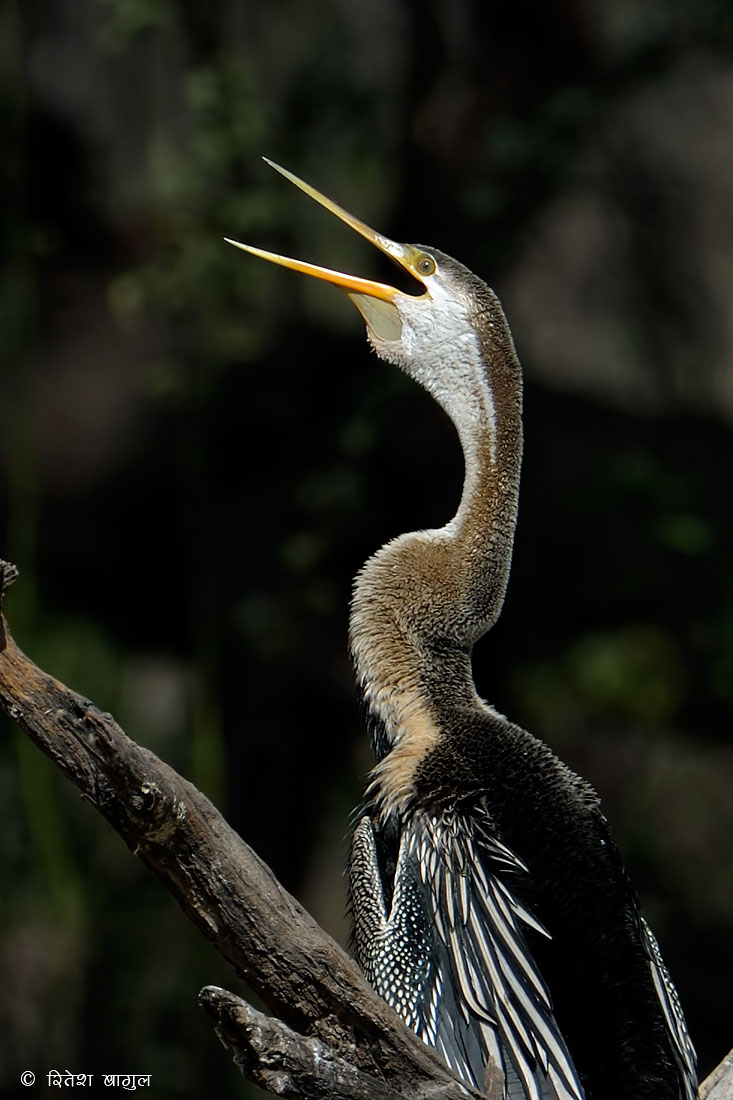
Darter

Glossy Ibis

Saras Crane

Hoppoe -anting behaviour
A Hoopoe was seen on the lawn in the gardens with crest open, wings spread and allowing the ants to bite it, and release acid which acts as disinfectant.


Black Necked Stork - female

Little Grebe
We left Bharatpur with sinking heart, with plans to return again in next season, anybody will agree that one can not see so many of species and and so many in quantity anywhere in India. We reached Jaipur late in the night and waited for next day to bird at Sambar Lake,
Day 4: May 5, 2013 : Around Jaipur
As we travelled towards Sambar Lake, we already had started missing the bird density effect of Bharatpur. It was getting very hot and birds were few in sight. We could come across small ponds in and around villages. Where we could see some waders.

Pied Avocet

Pied Avocet
We pushed ourselves birding under the scorching sun. There were *Small pratincoles*, various waders and a flock of *Great White Pelicans* at the distance end of the Naliyasar lake.


Garganey duck

Great white pelicans

Long legged Buzzard.
There were few sightings at Sambar Lake and we decided to have return migration.
There were few sightings at Sambar Lake and we decided to have return migration.

Can't have enough of this Orange Eye Candy bird...Such a wonderful creation.
----------------------------------------------------------------------------------------------------------
Equipments used for Photography : Nikon D200 SLRl, Nikon D50 SLR, 18-55 lens, 300mm f2.8 VR II lens+1.7x tc.
----------------------------------------------------------------------------------------------------------
| श्री कृष्णार्पणमस्तु |


