
Indian Gazelle (चिंकारा) at Mayureshwar Wildlife Sanctuary.
As winters approach and migratory waterfowls pour in, Bhigwan and its backwaters are constantly thought in the mind of photo addicts like me. Water bodies are becoming fastest victims of our development agenda, as we have seen grave situation like Uran. Very few promising wetland habitats are going to be there in next couple of years. So far Bhigwan, though distant (250 kms from Mumbai) has not been so much damaged to maintain existence of a large water body as refuge for many of the resident and migratory birds. Thus it remains major attraction for bird watchers around Pune and Mumbai.
Alok Bhave and myself decided to have quick two days tour to Bhigwan during Christmas holidays in Dec 2014. We added Kavdi (on the way from pune to bhigwan) while onward travel, and covered Mayureshwar Wildlife Sanctuary (near Supe) on the returning journey. Thus we could spend one evening and one morning around Bhigwan .We pitched ourselves at Kumbhargaon at Nagre's homestay and tried to maximize the gain with two boat safaris. Troll around the Kumbhargaon adn diksal produced quite good sightings, though as experienced as always the species seems on decline.
We decided to travel early morning (4.30 am) on 25th Dec 2014 from Mumbai to Pune to take advantage of low traffic and reach our first destination Kavdi around 8 am. Kavdi pat is small village adjoining the stagnated flows of Mula-Mutha river. The place has a wonderful potential to be gold mine for all sorts of water species from storks to ducks to snipes, but unfortunately, the place is simply filled with filth carried by rivers...sorry rivers are forced to carry this filth, poured by so called civilized population. My heart really cries upon seeing beautiful birds foraging the garbage sites for food. If serious efforts are not taken up, this site will die soon.
Following are photographs taken at Kavdi.

River terns, Shovelers resting on their favorite mound encroached by garbage

Jungle Myna
We saw villagers store heaps of cow dung to be processed in to fuel and fertilizer, offers lot of food for many of the birds. Jungle and Bank Mynas were seen frequenting the cow dung heaps. Number of Bank Mynas seems to be reduced. ( needs verification from other observers)
We saw villagers store heaps of cow dung to be processed in to fuel and fertilizer, offers lot of food for many of the birds. Jungle and Bank Mynas were seen frequenting the cow dung heaps. Number of Bank Mynas seems to be reduced. ( needs verification from other observers)

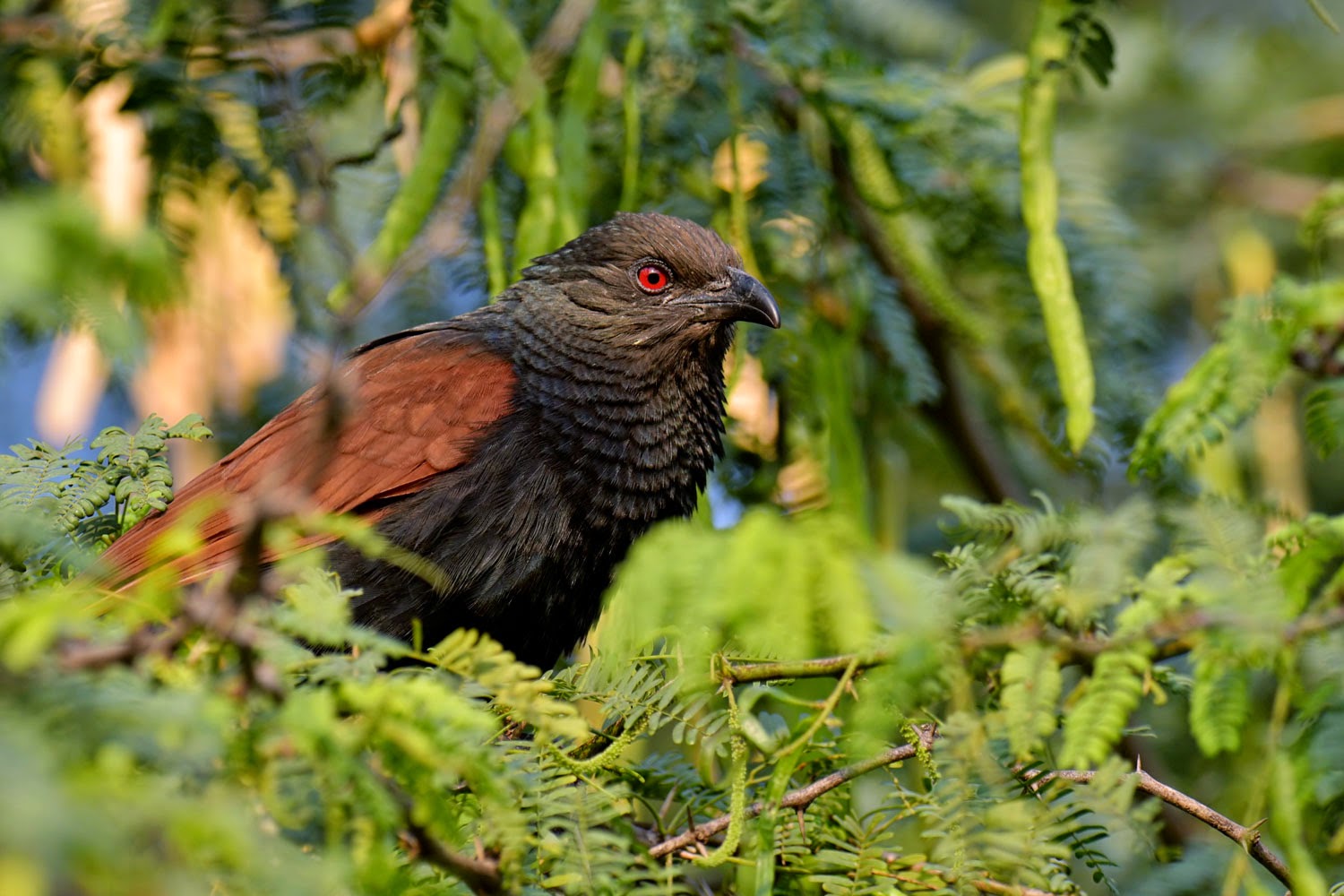
Greater Cocoul
Absolute delightful opportunity of clicking this common but magnificent bird in morning light.

Absolute delightful opportunity of clicking this common but magnificent bird in morning light.
White browed fantail flycatcher

Black Drongo

Black Drongo
It (black Drongo) was not deterred by our close presence, it had fixed his eyes on the insects moving in the cow dung heap near by and made frequent sorties to pick up them as life saving protein rich breakfast on chilly morning of winters

Common Hoppoe


This bird allowed us to take as many as photographs. This bird was actually defending its territory (bush) from other ashy prinia. We slowly approached and sat down to click it while it was preening and making various poses.


House sparrow

Yellow wagtail


Little ringed plover (no breeding plumage)


Paddyfield pipit with strange legs.
Apparently it is a disease, could it be linked to the polluted environment of Kavdi.


We proceeded to Bhigwan as the sun climbed up and light became harsher for photography.
Scouted various water bodies at diksal in the afternoon and decided to go to Kumbhargaon. We could hire a boat for evening ride to watch greater flamingos.

Greater flamongos

Greater flamingos


Brown headed gull- fishing the bait

Boat ride operators usually pick up bucket of fish from the fishermen to feed the gulls and when gulls are feasting on the bait, photographers enjoy the opportunity of clicking them.


Morning at backwaters
We hired boat once again in the morning to try for better images of flamingos. But flamingos were disturbed due to too many boats present at the site. We could click Grey herons in flight on the way back.

Grey heron
Decided to roam around the Kumbhargaon area, near the water edges and could find Black winged stilts, Grey herons, Great Herons, Painted Storks, Ruddy shelducks, Kingfishers, Open billed storks, Little stints, Little ringed plovers etc.

This bird is most extreme when it comes to the proportion of body to leg height.


Little ringed plover
The colorful reflection in the waters is actually due to a village lady washing cloths at the water bank. The birds appeared very tame to regular village folks but when we approached, every bird understood that we are photographers and ran away. We can pretend to be non-threatening to our best, but bird knows...For above image we laid ourselves flat on the ground and waited for the bird to come closer.


In the afternoon we proceeded towards Pune back, and on the way we took a turn towards the Supe area and visited the Mayureshwar wildlife sanctuary, a very small hilltop and grassland area. It is famous for Chinkara and Wolves. Also it offers lot of opportunity to click grassland species. We came across birds like Indian Courser, Yellow wattled lapwings, Bay backed shrike, Southern Grey shrike, Bushlark, Ashy crowned sparrow lark, Rufus tailed lark, Indian silverbills, Oriental collared dove etc.

These are really difficult species to photograph, these birds maintain a distance, even if you stealthily approach them, they will quickly adjust by running faster. Amazing species to watch in beautiful grassland landscape.

Rufus tailed lark


Chinkara
Finally when lights were falling we could come across a beautiful chinkara unaware of us, it was feeding, as we approached in a car, it got alert and posed few moments before vanishing.

Chinkara male
We happily wrapped our gears with this last sighting and started our way back to Mumbai. We wished we could spend some more time around, as the sun was setting and sky started becoming colorful. A beautiful sunset was anticipated, but lack of time forced us to move fast. However on the way back, could capture a quick sunset picture.

----------------------------------------------------------------------------------------------------------
Equipments used for Photography : Nikon D750 SLR, Nikon D200, Nikon D50 SLR, 18-55 lens, 300mm f2.8 VR II lens+1.7x tc.
----------------------------------------------------------------------------------------------------------
| श्री कृष्णार्पणमस्तु |


